Cebu Archbishop’s Coral Reef Project Revives Local Marine Ecosystem
In a powerful testament to the intersection of faith, community, and environmental stewardship, a groundbreaking coral reef restoration project spearheaded by Cebu Archbishop Jose S. Palma is showing remarkable success. What began as a spiritual and ecological vision is now breathing new life into the degraded marine habitats off the coasts of Cebu, offering a beacon of hope for coral reefs worldwide.
This initiative moves beyond symbolic gesture, representing a hands-on, science-informed mission to heal the ocean. It underscores a profound message: caring for creation is a moral imperative, and tangible action can spark a wave of positive change, both ecological and social.
A Divine Mission for an Earthly Crisis
The Philippines, an archipelagic nation at the heart of the Coral Triangle, is home to some of the planet’s most biodiverse marine ecosystems. However, these critical underwater gardens face relentless threats from destructive fishing practices, pollution, coastal development, and the escalating impacts of climate change, such as ocean warming and acidification.
Witnessing the decline of these vital ecosystems, which countless fishing communities depend on for food and livelihood, Archbishop Palma felt a call to action. The project, deeply rooted in the Catholic concept of “Laudato Si’”—Pope Francis’s encyclical on care for our common home—aims to translate theological concern into concrete ecological repair. The archbishop’s leadership has been pivotal in mobilizing the local church network, parishioners, fishermen, and municipal governments into a unified conservation force.
The Engine of Recovery: How the Project Works
The archdiocese’s strategy employs proven marine restoration techniques, focusing on creating new substrates for coral growth and fostering community ownership of the process.
Coral Nursery and Transplantation
At the heart of the project is the cultivation of coral fragments. The team collects healthy, resilient coral “donors” from existing reefs. These fragments are then secured onto underwater structures in designated nursery areas where they are monitored and cared for. Once these fragments have grown into robust colonies, they are carefully transplanted onto degraded reef sites or artificial structures, effectively jump-starting the reef’s natural recovery process.
Deploying Artificial Reef Structures
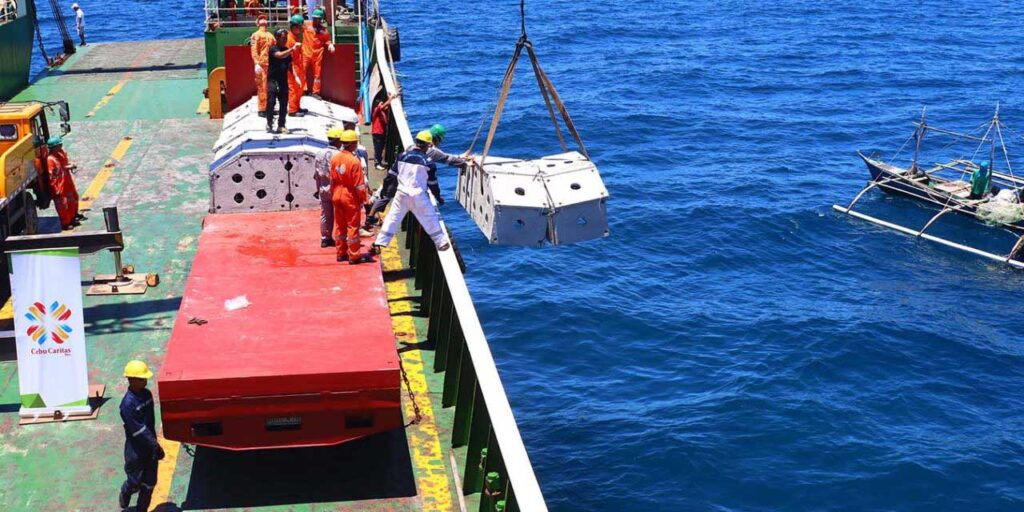
In areas where the seabed is barren or unstable, the project installs artificial reef structures. These are often made from environmentally friendly materials like concrete or specially designed steel frames. These structures serve a dual purpose:
- They provide a stable, complex substrate for transplanted corals to attach and grow.
- They immediately create habitat complexity, attracting fish and other marine organisms, which helps restore the local food web and biodiversity.
Community as Custodians
Perhaps the most critical component is the full integration of the local community. Former fishermen who once practiced destructive methods are now trained as “Bantay Dagat” (Sea Guardians) and reef monitors. They are involved in every step:
- Building and deploying reef structures.
- Maintaining coral nurseries.
- Transplanting mature corals.
- Patrolling the restored areas to prevent illegal fishing.
This approach ensures not just ecological buy-in but also provides alternative livelihoods, turning poachers into protectors.
Visible Waves of Success: What’s Changing Beneath the Waves
The results, as reported by marine biologists monitoring the sites, are profoundly encouraging. Areas that were once underwater deserts are now teeming with life.
Increased Coral Cover and Biodiversity: Transplanted corals are showing high survival and growth rates. The complex habitat created by both natural and artificial reefs has led to a significant return of fish species, crustaceans, and other invertebrates. The sound of a healthy reef—the pops, crackles, and clicks of marine life—is returning.
Fisheries Recovery: As the reef structures attract more fish, they create natural breeding and nursery grounds. Local fishermen are already reporting improved catch in the surrounding areas, a direct economic benefit that reinforces the value of the protected zone. The project demonstrates that marine protected areas, when community-led, can enhance, not hinder, food security.
Coastal Protection: Healthy coral reefs act as natural breakwaters, dissipating wave energy and protecting shorelines from erosion. The reviving reefs are beginning to restore this vital service for vulnerable coastal communities in Cebu.
A Model of Hope and Collaborative Action
The Cebu Archbishop’s Coral Reef Project is more than a conservation success; it is a powerful model for holistic environmental action. It proves that effective ecosystem restoration must be:
- Ethically Grounded: Framed within a moral and spiritual context that resonates deeply with the community.
- Scientifically Informed: Utilizing the best available marine science and techniques.
- Community-Driven: Empowered and owned by the people whose lives are most directly connected to the resource.
- Collaborative: Bridging institutions (Church, Local Government Units, NGOs, Academia) that don’t always work in tandem.
The project’s legacy is already inspiring other dioceses and faith groups across the Philippines and beyond to view their coastal environments as sacred trusts to be actively safeguarded.
Looking to the Future
The journey is far from over. The project faces ongoing challenges, including the persistent global threat of climate change, which can cause catastrophic coral bleaching events. The archdiocese and its partners plan to expand the project’s scale, continue monitoring for climate resilience, and deepen environmental education within parishes and schools.
Archbishop Palma’s initiative stands as a luminous example of what is possible when moral leadership converges with practical science and community heart. It sends a clear message: the healing of our wounded planet is not a task for distant experts alone, but a sacred vocation in which every community, guided by faith and hope, can play a transformative part. In the waters of Cebu, a story of redemption is being written—not just for corals and fish, but for humanity’s relationship with the sea.