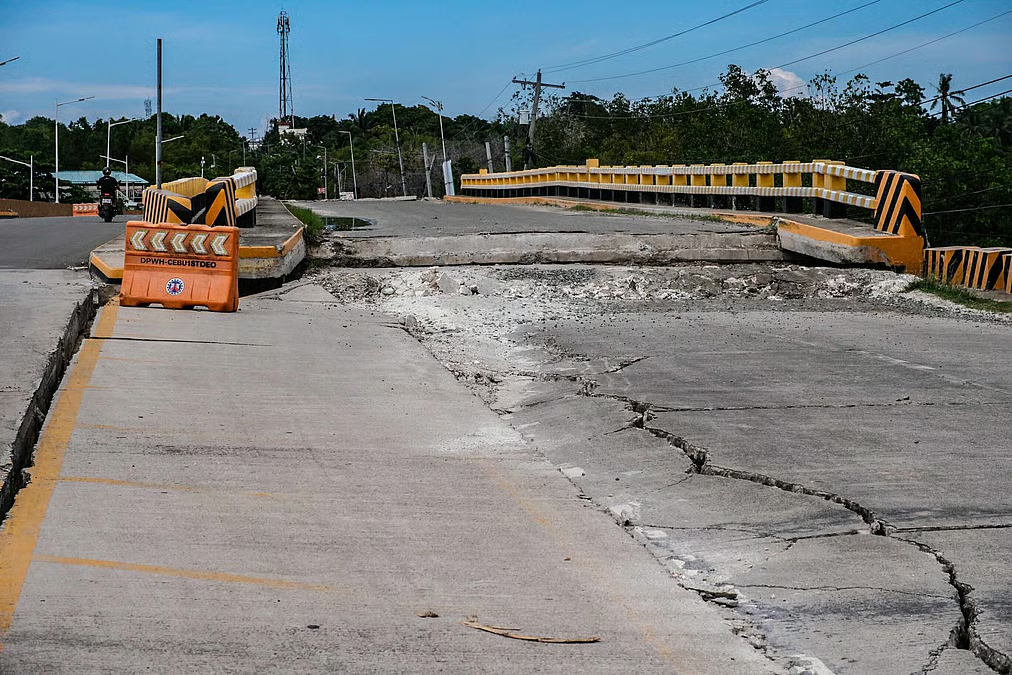
Capitol Fast-Tracks Rehabilitation of Quake-Damaged Bridges
Residents and commuters across the Capitol region have been holding their breath since a recent earthquake damaged critical infrastructure. Now, state officials have announced an accelerated timeline for repairing severely affected bridges. This is not just about convenience—it is a race against time to restore safety and vital transport links.
The Urgency Behind the Fast-Track Decision
After the earthquake, engineers quickly assessed dozens of bridges across major highways and waterways. The findings were serious. Several structures showed major damage, including:
- Shear cracks in concrete support columns
- Displacement of bridge deck sections
- Damage to expansion joints and bearings
- Weakening of key abutments
Normally, projects of this scale would take years of planning and phased construction. However, the Capitol Department of Transportation has declared a state of emergency, allowing it to bypass standard procedures and fast-track repairs.
What Triggered the Accelerated Response?
Officials pointed to three main reasons for the urgent action:
- Public Safety – Thousands of vehicles rely on these bridges daily, making failure risks unacceptable
- Economic Impact – Delays could disrupt freight routes and cost the economy millions each week
- Secondary Damage – Water entering cracks is accelerating corrosion of internal steel reinforcements
Targeted Bridges and Damage Reports
The fast-track plan prioritizes the most heavily damaged structures.
North River Viaduct
This is the largest project in the repair program. The bridge suffered major displacement at its central expansion joint, with engineers reporting a lateral shift of nearly three inches during the quake.
Repair work includes:
- Installing temporary steel shoring towers
- Hydraulic jacking to realign the structure
- Replacing seismic-resistant bearings
- Reinforcing cracked columns with carbon fiber wrapping
Old Mill Truss Bridge
This historic steel bridge remains structurally usable but has buckled in key truss sections.
Planned repairs include:
- Welding stiffening plates on damaged sections
- Replacing high-strength bolts
- Applying full corrosion protection coating
- Imposing temporary reduced load limits
Westgate Overpass Interchange
Already flagged for structural fatigue, this interchange suffered further damage from the earthquake. Several ramps show concrete spalling and exposed reinforcement steel.
Repairs include:
- Full deck replacement on the most damaged ramp
- Partial repairs on secondary ramps
- Reinforcement of exposed structural elements
How the Fast-Track Process Works
Many are asking how repairs can be completed so quickly. The answer lies in emergency procedures and streamlined contracting.
Standard Process (Normal Timeline)
- Damage assessment (months)
- Environmental studies (months)
- Engineering design (1–2 years)
- Public bidding (months)
- Construction (1–3 years)
Fast-Track Process
- Emergency declaration removes standard bidding delays
- Pre-qualified contractors are directly assigned
- Design and construction happen simultaneously
- 24/7 construction shifts are implemented
- Materials are sourced from stockpiles and emergency suppliers
Impact on Daily Commuters
While repairs aim for faster recovery, commuters will face disruptions.
Lane Closures and Detours
Expect:
- Overnight full closures for heavy construction work
- Reduced lanes on key bridges
- Weight limits for heavy trucks
- Contraflow lanes during peak hours
Real-time traffic updates will be available through navigation apps. Officials encourage commuters to use public transport or alternate routes for the next 90 days.
Economic Incentives for Carpooling
To reduce congestion, the government is introducing temporary measures:
- Discounted tolls for vehicles with 3+ passengers
- Free park-and-ride facilities
- Extended commuter rail schedules
- Subsidized vanpool programs for companies
The Engineering Challenge: Seismic Retrofitting
This earthquake exposed the limits of older bridge designs. The rehabilitation effort is not only about repairs but also about future resilience.
Modern Technologies Being Used
Engineers are applying advanced seismic solutions:
- Lead Rubber Bearings – Allow controlled movement during earthquakes
- Fluid Viscous Dampers – Absorb seismic energy like shock absorbers
- Shape-Memory Alloys – Return structures to original position after shaking
- Carbon Fiber Reinforcement – Strengthens concrete and prevents failure
Timeline for Completion
The recovery plan is divided into three phases:
Phase 1: Emergency Stabilization (First 30 Days)
- Temporary support structures installed
- Hazardous debris removed
- Immediate patching of critical sections
Phase 2: Core Structural Repairs (Days 31–120)
- Major bridge repairs completed
- Bearing and joint replacements
- Initial load testing
Phase 3: Full Restoration (Days 121–200)
- Removal of temporary supports
- Final paving and lane restoration
- Full seismic upgrades completed
- Final safety certification
Officials expect full reopening of major routes within 200 days.
Public Safety Recommendations
Authorities are urging the public to follow safety guidelines:
- Obey reduced speed limits near construction zones
- Avoid stopping on bridges
- Stay alert for falling debris or materials
- Report any new structural damage immediately
Conclusion
The Capitol region is facing a major infrastructure challenge, but the fast-tracked rehabilitation of quake-damaged bridges shows a strong commitment to safety and recovery. Although the process will cause temporary disruption, it is essential for long-term resilience.
Through emergency action, modern engineering, and continuous construction efforts, the government aims to restore full connectivity faster than expected.
For now, commuters are advised to stay informed, plan ahead, and remain patient. These temporary inconveniences are paving the way for a safer and stronger transportation network in the future.