BIMP-EAGA Sets Ambitious Goal: 100% Surge in Tourism by 2035
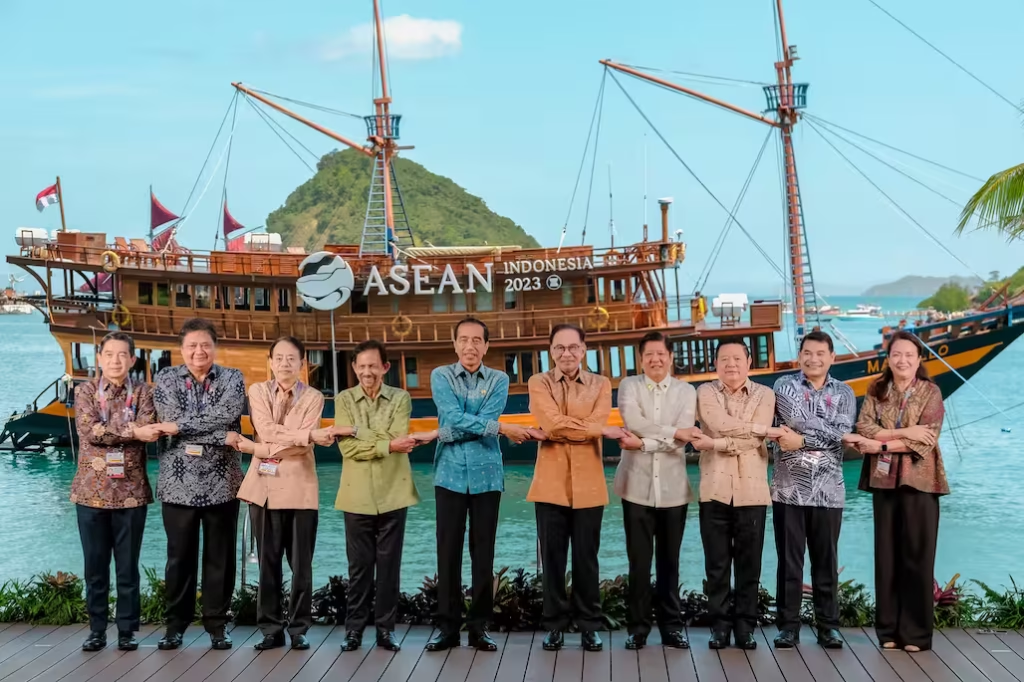
The Brunei-Indonesia-Malaysia-Philippines East ASEAN Growth Area (BIMP-EAGA) has officially unveiled a bold roadmap to double its tourism arrivals by 2035. This target, announced during the latest ministerial meeting, signals a strategic pivot toward cross-border collaboration, infrastructure development, and sustainable travel experiences across the subregion. For travel industry stakeholders, the question is no longer if this goal is achievable, but how the bloc will navigate the complex interplay of investment, policy harmonization, and environmental stewardship to turn ambition into reality.
A Subregion Poised for Transformation
BIMP-EAGA spans four nations but focuses on subnational territories—often remote, less developed, yet rich in cultural and ecological assets. From the pristine reefs of Palawan to the rainforests of Kalimantan, from Sabah’s Mount Kinabalu to the UNESCO-listed heritage of Brunei’s Kampong Ayer, the region holds untapped potential.
Currently, visitor numbers remain modest compared to mainstream ASEAN destinations like Thailand or Vietnam. A 100% increase by 2035 would translate to millions of additional travelers, injecting billions of dollars into local economies and creating jobs across the tourism value chain.
Why This Target Matters Now
Several converging factors make this objective both timely and realistic:
- Post-pandemic recovery momentum: Global travel demand has rebounded strongly. BIMP-EAGA arrivals in 2024 already exceeded pre-COVID levels in several gateway cities, providing a solid baseline.
- Infrastructure investments: The region has attracted significant funding for airports, seaports, and digital connectivity—particularly under the ASEAN Connectivity Master Plan. Direct flights between Tawau (Malaysia) and Tarakan (Indonesia) were launched in 2023, cutting travel time from days to hours.
- Shifts in traveler behavior: The rise of slow travel, eco-tourism, and community-based experiences aligns perfectly with BIMP-EAGA’s underdeveloped, nature-first destinations. High-value, low-impact tourism is a competitive advantage rather than a limitation.
- Political will: The six BIMP-EAGA ministers have committed to a harmonized visa framework and streamlined cross-border clearance. No more queuing for separate visas when island-hopping between Indonesia and Malaysia.
The Strategic Roadmap to Doubling Arrivals
Achieving a 100% lift by 2035 requires more than marketing campaigns. The bloc’s newly released Tourism Investment & Development Plan identifies three core pillars.
1. Air and Sea Connectivity as the Backbone
Without reliable transport, even the most stunning destination remains inaccessible. BIMP-EAGA is prioritizing:
- Expansion of secondary airports in Pontianak (West Kalimantan), Puerto Princesa (Palawan), and Labuan Bajo (East Nusa Tenggara) to handle narrow-body jets and regional turboprops.
- Ferry and catamaran routes linking island clusters—for example, connecting the Turtle Islands Heritage Protected Area (Philippines-Malaysia) with a new eco-marine circuit.
- Public-private partnerships to incentivize low-cost carriers to serve thinner routes. The introduction of a BIMP-EAGA aviation fund could underwrite risk for airlines launching new services.
Expert insight: In my experience advising regional tourism boards, the single biggest barrier to growth across the Sulu-Sulawesi corridor has been the absence of seamless multi-modal transport. If the bloc can achieve a 30% reduction in travel time between any two member destinations by 2030, the 100% arrival target becomes largely attainable.
2. Sustainable Destination Management
Uncontrolled growth risks destroying the very assets that attract visitors. BIMP-EAGA is embedding sustainability into its expansion plan through:
- Carrying capacity studies for iconic sites such as Tubbataha Reefs and Kinabalu Park. Limits on daily visitors will be enforced using digital booking systems.
- Community tourism standards requiring that at least 40% of tourism revenue from homestays and guided treks remains in local villages.
- Green certification for hotels and tour operators. The BIMP-EAGA Sustainable Tourism Label, launched in 2024, covers waste management, energy efficiency, and cultural sensitivity.
A destination that grows responsibly not only survives but thrives. The region’s coral triangle and orangutan habitats must not become victims of their own success.
3. Digital Integration and Border Efficiency
One of the most frustrating experiences for travelers in BIMP-EAGA has been the bureaucratic friction at land and sea borders. The plan tackles this head-on:
- Single check-in points for cruise and ferry passengers, where immigration and customs are handled pre-departure.
- Biometric clearance at major entry points, with a target of 90% of visitors processed within 10 minutes by 2030.
- Regional tourism app that aggregates transport schedules, permits, and real-time capacity data—a one-stop shop for the intraregional traveler.
Expert note: I have seen similar digital corridors succeed in East Africa’s Northern Circuit and the Mekong Subregion. The key is political will to share passenger data and standardize fees. BIMP-EAGA’s existing Economic Corridor framework provides a ready mechanism for this.
Sector-Specific Opportunities
Beyond general arrivals, the 2035 target will drive growth in specific niches:
- Marine and dive tourism: With over 600 marine protected areas, the region can position itself as the world’s premier diving destination. Liveaboard operators and dive resorts are expected to see a 150% increase in bookings within the decade.
- Cultural and heritage circuits: The “Spice Route” connecting Brunei’s royal regalia, Indonesia’s Dayak longhouses, and Philippines’ indigenous weaving communities offers a year-long traveler itinerary.
- Medical and wellness tourism: Brunei’s world-class healthcare, combined with Indonesia’s traditional Jamu wellness retreats, creates a compelling package for middle-income travelers from East Asia.
Each of these segments carries higher per-tourist spending, meaning the 100% arrival increase could yield a 150–200% rise in tourism revenue—a multiplier effect that finance ministers will welcome.
Challenges That Cannot Be Ignored
No growth plan is without hurdles. BIMP-EAGA must address:
- Infrastructure gaps beyond transport: Reliable electricity, clean water, and waste management remain inconsistent in many remote areas. Private sector investment will be critical, but government guarantees are needed.
- Climate vulnerability: Rising sea levels and coral bleaching threaten coastal destinations. The bloc must integrate climate adaptation funding into every new tourism project.
- Security perceptions: Historical piracy and geopolitical tensions in the Sulu Sea still linger in travelers’ minds. Enhanced joint patrols and a dedicated tourism police force can rebuild confidence.
- Skills shortages: A 100% increase in arrivals requires a parallel doubling of trained guides, hotel managers, and conservation officers. Vocational training institutes must scale up quickly.
The Bottom Line for Travel Businesses
For tour operators, hoteliers, and travel advisors watching the region, BIMP-EAGA’s 2035 target is not just a number—it is an investment signal. Early movers who align with the bloc’s sustainability criteria and digital initiatives will gain a competitive edge. The subregion is no longer a footnote in ASEAN tourism; it is becoming a headline story.
As the ministers prepare to meet again in 2025 to review the first-year progress, one thing is clear: the 100% boost is ambitious, but with disciplined execution, it is within reach. The next decade will determine whether BIMP-EAGA can transform its fragmented paradise into a seamless, world-class destination—and inspire other slow-growth regions to follow its lead.