Remote Japanese Island Scrutinized Over Nuclear Waste, Rare Earth Plans
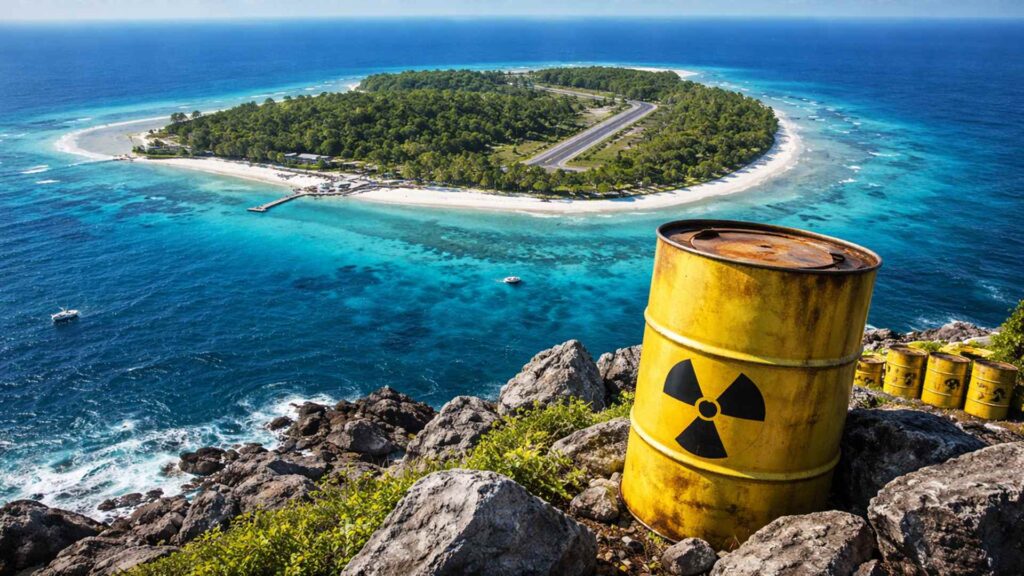
The quiet waves lapping against the shores of a remote Japanese island mask a growing storm of geopolitical, environmental, and industrial tension. For decades, this isolated speck of land was known primarily for its rugged beauty and traditional fishing communities. Today, it finds itself at the epicenter of a high-stakes balancing act between national energy security, global technology competition, and the long-term safety of its residents.
As Japan accelerates its search for both a permanent nuclear waste disposal site and a domestic source of critical rare earth minerals, this specific island has emerged as a candidate for both—a convergence that has drawn intense scrutiny from scientists, local government officials, and environmental watchdogs.
The Island at the Center of a National Dilemma
The location in question is not just any rock in the Pacific. Its geological composition makes it an outlier in the Japanese archipelago.
What makes this island unique?
- It possesses geological formations that are unusually stable compared to mainland Japan, which sits on the volatile Ring of Fire.
- Crystalline rock structures deep underground offer the theoretical potential for long-term waste isolation.
- Offshore seabed deposits contain significant concentrations of rare earth elements (REEs).
For Tokyo, this represents a rare opportunity to solve two of its most pressing resource problems in one geographical area. But for the island’s residents, this dual proposal feels less like an opportunity and more like a sentence to become the nation’s sacrifice zone.
The Nuclear Waste Factor: A 100,000-Year Commitment
Japan has been grappling with the disposal of high-level radioactive waste (HLW) since the dawn of its nuclear power program. Unlike low-level waste, which can be stored near the surface, HLW requires deep geological disposal—essentially, burying it hundreds of meters underground in stable rock formations where it can decay safely over tens of thousands of years.
Currently, all of Japan’s HLW sits in temporary storage pools and dry casks at reactor sites. This is not a sustainable long-term solution. The national government has spent decades trying to identify willing host communities, overwhelmingly facing rejection.
The specific challenges for this island:
- Seismic risk: While the island is more stable than the national average, no location in Japan is truly seismically inert. Critics argue that even minor tectonic movements over 100,000 years could compromise containment.
- Ocean proximity: The proposed site is coastal. A deep disposal facility must guarantee zero groundwater contamination reaching the sea—a standard that environmental engineers admit is extraordinarily difficult to verify over geologic timescales.
- Community consent: Current plans require “voluntary” hosting from local municipalities. The offer of massive financial subsidies is being weighed against the permanent stigma of becoming a nuclear graveyard.
The ‘Stigma Trap’ of Hosting Nuclear Waste
There is a well-documented phenomenon in waste siting economics: communities that accept nuclear repositories often see property values decline, tourism evaporate, and agricultural exports shunned. For an island whose economy relies heavily on fishing and seasonal tourism, this risk is existential.
Local opposition groups have pointed to the experience of Yucca Mountain in the United States and Onkalo in Finland, noting that even in nations with advanced geological disposal programs, public trust remains the hardest barrier to overcome.
The Rare Earth Element Bonanza: Geopolitics Below the Seabed
While nuclear waste grabs the headlines, the proposal to mine rare earths from this island’s offshore deposits is arguably the more immediate driver of government interest.
Why rare earths matter:
- They are essential for manufacturing permanent magnets used in electric vehicle motors, wind turbines, and military guidance systems.
- They are critical for defense technology, including lasers, radar systems, and advanced optics.
- They are required for consumer electronics, from smartphones to flat-screen televisions.
Breaking China’s Monopoly
The strategic calculus here is blunt. China controls approximately 60–70% of global rare earth mining and an even higher percentage of processing capacity. For years, Tokyo has watched with unease as Beijing has used this leverage for political purposes, including export restrictions during diplomatic disputes.
Japan currently relies almost entirely on imported rare earths. A domestic source—even a small one—would provide a degree of strategic autonomy that defense planners and industrial policymakers desperately want.
The island’s deposits are particularly attractive because they contain:
- Dysprosium and Terbium: Critical for high-temperature magnets in aerospace applications.
- Neodymium: The backbone of permanent magnet production.
- Yttrium and Europium: Used in phosphors for lighting and display screens.
The Environmental Paradox of Clean Energy Mining
Here lies the central irony that environmental advocates are quick to highlight. Rare earth mining is notoriously dirty. It generates radioactive thorium and uranium byproducts, requires toxic chemicals for processing, and can devastate local ecosystems.
Proponents argue that modern deep-sea mining techniques are far cleaner than traditional open-pit mining. They point to Japan’s strict environmental regulations and the possibility of controlled domestic processing.
Opponents counter that offshore extraction remains poorly understood, especially in benthic ecosystems. Combining rare earth mining with nuclear waste storage in the same region amplifies environmental risk concerns.
The Regulatory and Legal Maze
Japan’s Nuclear Regulation Authority (NRA) has set a high bar for geological disposal.
Key requirements:
- The host rock must have extremely low permeability to water flow.
- The site must be located at least 300 meters underground.
- The disposal system must remain intact for 10,000 to 100,000 years.
Meanwhile, the Ministry of Economy, Trade and Industry (METI) is pushing for rare earth mining permits. Although separate on paper, both regulatory tracks converge in practice on a small island.
Legal Precedent and International Scrutiny
Japan is a signatory to the Joint Convention on the Safety of Spent Fuel Management and on the Safety of Radioactive Waste Management, requiring transparency and public participation.
Environmental groups are preparing to challenge any fast-tracked approvals using international frameworks, with potential escalation to the International Atomic Energy Agency (IAEA) or even the International Court of Justice.
The Human Dimension: A Community Divided
Interviews with local residents reveal a community struggling with an impossible choice.
The arguments in favor:
- Economic revitalization through jobs and infrastructure investment.
- A sense of national duty to support Japan’s energy and resource security.
- Scientific confidence from some geologists who argue the site is suitable.
The arguments against:
- Permanent stigma as a nuclear waste site, damaging tourism and fisheries.
- Intergenerational ethics, with consequences spanning thousands of years.
- Deep mistrust of government assurances following past nuclear controversies, particularly Fukushima.
What Comes Next: The Decision Timeline
The debate is entering a critical phase.
Expected milestones:
- 2024–2025: Final geological surveys and feasibility studies.
- 2025–2026: Possible local referendums.
- 2026–2027: Potential national approval for final designation.
The outcome will shape Japan’s energy and industrial strategy for decades. Approval could establish a global model for dual-purpose resource management. Rejection would force Japan to continue searching for politically and geologically viable alternatives.
The Bigger Picture for Japan’s Energy Future
This island reflects Japan’s broader structural constraints.
With limited flat land, high seismic activity, and densely populated coastlines, Japan faces unusually difficult choices in balancing energy production, waste management, and resource independence.
The rare earth dimension adds geopolitical urgency shaped by global conflicts, supply chain vulnerabilities, and the increasing weaponization of critical minerals.
The central question remains unresolved: whether Japan can simultaneously secure clean energy, technological independence, and environmental responsibility without placing disproportionate burden on a single community.
The answer may ultimately be shaped by the geology of one remote island—but its implications will extend far beyond it.