How a Historic Hawaiian Storm Awakened Prehistoric ‘Dinosaur Shrimp’ and Resurrected an Endangered Bird
A rare Kona Low deluge transformed barren Niʻihau into a thriving wetland, triggering a biological chain reaction 300 million years in the making.
In a remarkable twist of ecological fate, a rare and powerful storm that swept across the arid Hawaiian island of Niʻihau did more than just drench the parched landscape. It triggered a biological resurrection straight out of a natural history documentary. The deluge awakened dormant eggs of ancient “dinosaur shrimp” — crustaceans that have survived for hundreds of millions of years — and simultaneously sparked a population rebound for one of the world’s most endangered waterfowl, the Laysan duck. This extraordinary event, documented by Discover Magazine, offers a stunning glimpse into how extreme weather can act as a catalyst for ecosystem renewal in the most unexpected places.
The Miracle of a Rare Storm
Hawaii’s remote northwestern islands, including Niʻihau, are typically dry, receiving only a few inches of rain annually. But in early 2023, an unusually powerful storm named Kona Low — a type of low-pressure system that brings prolonged, heavy rain from the southwest — dumped more than a foot of precipitation over a short period. This deluge transformed barren, dusty playas into temporary wetlands, breathing life into a dormant ecosystem.
- The storm created shallow, ephemeral ponds that had not existed for years.
- These ponds became the perfect nursery for species that rely on extreme, short-lived aquatic habitats.
- Within days, the ponds teemed with tiny, wriggling creatures and attracted rare birds.
For conservationists and biologists, it was a once-in-a-decade opportunity to observe a natural phenomenon that reveals how life persists in the margins of aridity.
What Are ‘Dinosaur Shrimp’?
The term “dinosaur shrimp” is a popular name for tadpole shrimp of the genus Triops and related branchiopod crustaceans. These ancient creatures have remained virtually unchanged for over 300 million years, surviving the dinosaurs themselves. Their secret lies in an extraordinary adaptation: cryptobiosis.
When their temporary ponds dry up, adult shrimp die — but their eggs (or cysts) can withstand decades of desiccation, extreme heat, and even space-like vacuum. The cysts remain viable in the soil, waiting for the exact chemical and environmental triggers that signal water is back. Rain must meet specific parameters:
- Low salinity levels (freshwater pulses)
- Sufficient temperature range (not too hot, not too cold)
- Dissolved oxygen cues from microbial activity
When the Kona storm hit Niʻihau, it provided exactly that cocktail. Within 72 hours, cysts that had lain dormant for up to 20 years hatched into tiny, three-eyed, three-lobed swimming crustaceans that fed on algae and mosquito larvae. These “dinosaur shrimp” are not only a living fossil but also a critical food source for migratory and resident birds.
The Endangered Laysan Duck Returns
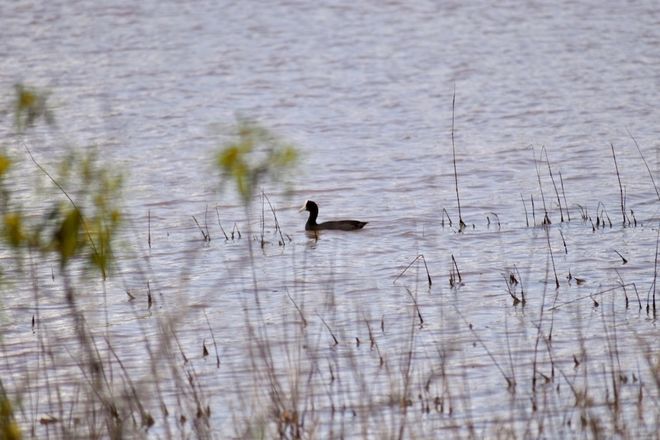
Perhaps even more astonishing was the bird’s reaction. The Laysan duck (Anas laysanensis) — a species once confined to just one island and numbering fewer than 100 individuals in the wild — was known to visit Niʻihau sporadically. But the temporary wetlands created by the storm transformed the island into a breeding hotspot.
- Laysan ducks are dabbling ducks that feed on invertebrates, seeds, and algae.
- They are highly adapted to coastal brackish wetlands but require clean, fresh water for successful breeding.
- Prior to the storm, no permanent water bodies existed on Niʻihau’s arid flats.
Within weeks of the pond formation, researchers observed Laysan ducks flocking to the new habitats. The birds began nesting along the edges, feasting on the newly hatched shrimp. Juvenile ducks were recorded for the first time in decades on the island, indicating that the storm had provided a rare successful breeding window.
This event is critical because it shows the importance of ephemeral wetlands for species conservation. These temporary habitats are often overlooked in favor of permanent lakes or rivers, yet they can act as stepping stones for species dispersal and genetic exchange.
“What looks like a barren, lifeless landscape may actually be a sleeping giant, ready to awaken at the first drop of a storm.”
Why This Matters for Conservation
The Niʻihau storm event is more than a novelty; it is a data point in the larger puzzle of how species adapt to climate extremes. As climate change intensifies, storms like Kona Lows may become more erratic — sometimes stronger, sometimes less frequent. Understanding how ecosystems respond to these “pulse events” can guide conservation strategies.
- Seed and egg banks: Preserving the soil seed bank and invertebrate egg banks becomes vital. If land is disturbed before a storm, the dormant cysts can be lost forever.
- Managed flooding: Some conservation projects are now experimenting with artificial flooding to mimic these natural triggers, using rain predictions to create temporary wetlands for rare species.
- Ecosystem connectivity: The transient nature of these ponds allows birds to move between islands, spreading seeds and eggs. This natural “lifeline” could be replicated through habitat corridors.
The Laysan duck’s success on Niʻihau also underscores the need for multiple island refugia. With sea-level rise threatening low-lying atolls, having alternative breeding sites — even temporary ones — can prevent extinction.
The Power of Extreme Weather Events
Critics might dismiss a single storm as a fluke, but ecologists recognize that such events have shaped life on Earth for millions of years. The ability of “dinosaur shrimp” to survive extreme arid conditions is a testament to evolution’s resilience. Similarly, the Laysan duck’s ability to locate and exploit these transient resources shows that even highly specialized birds retain a remarkable behavioral plasticity.
A Lesson in Resilience
What the Hawaiian storm teaches us is humility. Despite our sophisticated conservation tools — captive breeding, habitat restoration, genetic banking — nature still holds the cards. Sometimes, all it takes is a perfect rain to unlock a biological treasure chest that humans cannot artificially replicate.
For the indigenous Hawaiians, these temporary ponds were known as loko iʻa (fish ponds) in a broader sense, though they were often seasonal. They understood that the land and the rain were in constant conversation. Modern science is now catching up, recognizing that ephemerality is not a weakness but a strategy.
What Comes Next?
Biologists are now monitoring the Niʻihau ponds closely. Once the water evaporates — likely within months — the shrimp will die, but their cysts will be deposited back into the soil. The ducks will move on, perhaps to other islands, carrying the memory of this bounty. The soil itself becomes a time capsule, waiting for the next rare storm.
This cycle of death and rebirth is not merely poetic; it is the engine of biodiversity in extreme environments. By studying these events, we can better predict how other arid ecosystems — from the Australian outback to the deserts of Africa — might respond to shifting precipitation patterns.
If you want to see these “dinosaur shrimp” in action, keep an eye on Hawaii’s coastal playas after heavy rains. And remember: what looks like a barren, lifeless landscape may actually be a sleeping giant, ready to awaken at the first drop of a storm.