Royal Arrival Marks Brunei’s High-Level Engagement at 48th ASEAN Summit
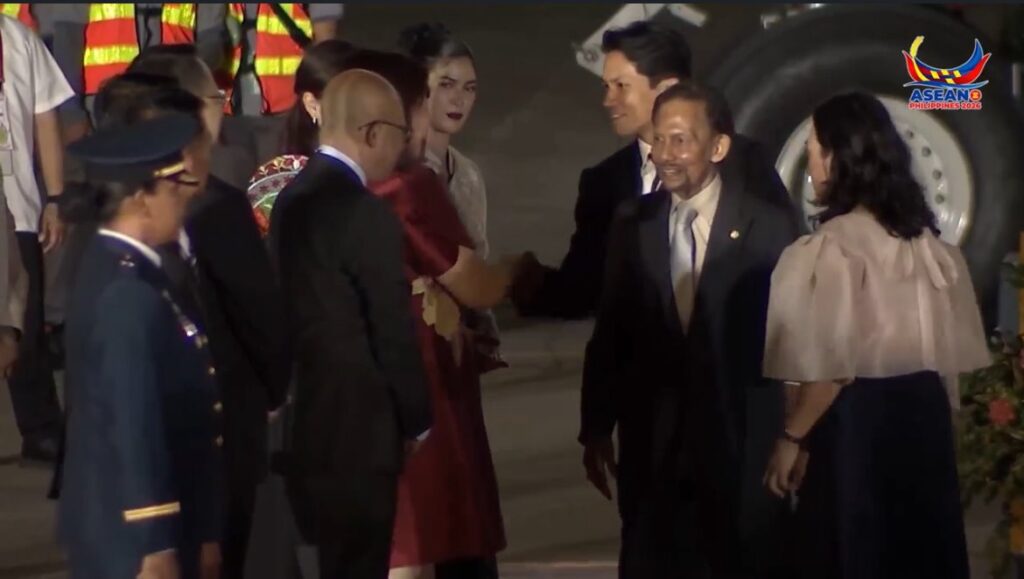
The arrival of Brunei’s Sultan Hassanal Bolkiah and Prince Abdul Mateen in Vientiane for the 48th ASEAN Summit signals a strong diplomatic presence from the small but influential sultanate.
As Southeast Asia’s longest-reigning monarch, the Sultan’s attendance underscores Brunei’s long-standing commitment to regional stability. At the same time, Prince Abdul Mateen’s participation reflects a deliberate effort to modernize Brunei’s diplomatic engagement.
This is not a symbolic appearance alone. The delegation is expected to advance policy discussions on economic diversification, digital trade, and maritime security, all of which are central to Brunei’s long-term post-oil strategy.
A Historic Arrival in Vientiane
The 48th ASEAN Summit, hosted by Laos, brings together all ten member states under the theme “ASEAN: Enhancing Connectivity and Resilience.”
Brunei’s delegation arrived at Wattay International Airport under tight security and formal diplomatic reception, consistent with ASEAN protocol standards.
The Sultan has historically maintained consistent attendance at ASEAN summits, reinforcing his view of the bloc as a cornerstone of Brunei’s foreign policy.
This year, however, the presence of Prince Abdul Mateen adds a generational dimension to the delegation.
Key observation: Prince Mateen’s role is no longer ceremonial. At 33, and serving as Deputy Minister in the Prime Minister’s Office, he is increasingly involved in diplomacy, trade discussions, and regional engagement.
Sultan Hassanal Bolkiah’s Role in ASEAN
The Sultan has played a foundational role in ASEAN’s institutional development, having signed the 1976 Treaty of Amity and Cooperation.
He remains a strong advocate of ASEAN’s core principles:
- Consensus-based decision-making
- Non-interference in internal affairs
- Peaceful dispute resolution
Expected priorities at the summit:
- Myanmar crisis: Continued support for dialogue and humanitarian access
- South China Sea: Emphasis on the Code of Conduct (COC) and peaceful resolution
- Economic resilience: Stronger ASEAN digital economy integration
His long tenure provides Brunei with continuity and influence in behind-the-scenes negotiations across ASEAN’s evolving political landscape.
Prince Abdul Mateen: Modern Diplomatic Representation
Prince Abdul Mateen represents the modern face of Brunei diplomacy, combining public visibility with official responsibilities.
His portfolio includes:
- Representation in ASEAN youth, sports, and digital technology forums
- International trade missions across Europe, Australia, and the Middle East
- Support for Brunei’s Wawasan 2035 development vision
At the summit, he is expected to co-chair side events focused on:
- Digital inclusion for ASEAN youth
- Sustainable tourism development
His communication style and global visibility strengthen Brunei’s soft power, particularly among younger audiences.
Key Agendas for Brunei at the 48th ASEAN Summit
Economic Diversification
Brunei continues to reduce dependence on oil and gas, which account for a significant share of its GDP.
Priority areas include:
- Halal industry expansion
- Green energy investments (solar, hydrogen, carbon capture)
- Digital finance and cross-border payment systems
Maritime Security
Brunei’s maritime claims in the South China Sea make this a strategic issue, though the country maintains a low-profile diplomatic approach.
Its position emphasizes:
- UNCLOS compliance
- Peaceful dispute resolution
- Avoidance of escalation
Human Capital Development
Prince Mateen supports initiatives focused on youth development, including:
- AI and cybersecurity training programs
- Entrepreneurship and digital skills education
- Proposal for an ASEAN Digital Academy
Strengthening Regional Economic Integration
Brunei plays an active role in BIMP-EAGA (Brunei-Indonesia-Malaysia-Philippines East ASEAN Growth Area), supporting sub-regional development.
Key proposals include:
- Energy grid connectivity in Borneo and Mindanao
- Improved transport links for tourism and trade
- Joint agricultural and food security initiatives
Brunei is also expected to support ASEAN infrastructure financing mechanisms for less-developed member states.
Brunei’s Geopolitical Position in ASEAN
Despite its small population, Brunei maintains strategic influence through balanced diplomacy.
Its approach includes:
- Supporting ASEAN centrality in regional affairs
- Maintaining neutrality between major global powers
- Encouraging economic cooperation over military alignment
Brunei also continues to strengthen ties with dialogue partners, including GCC countries, reflecting its Islamic diplomatic orientation.
Prince Mateen and Soft Power Diplomacy
Prince Abdul Mateen’s global visibility adds a modern dimension to Brunei’s diplomatic identity.
His influence includes:
- Strong social media presence, enhancing global awareness of Brunei
- Cultural diplomacy through international engagements
- Youth-oriented public diplomacy initiatives
At the summit, he will engage with ASEAN entrepreneurs under 35, focusing on:
- E-commerce development
- Digital transformation of traditional industries
- Innovation and startup ecosystems
Conclusion: A Dual-Track Diplomatic Strategy
The presence of Sultan Hassanal Bolkiah and Prince Abdul Mateen at the 48th ASEAN Summit reflects a dual-track approach to diplomacy.
The Sultan provides continuity, institutional experience, and geopolitical stability.
Prince Mateen brings modern engagement, youth outreach, and digital-era diplomacy.
Together, they reinforce Brunei’s role as a small but strategically relevant actor within ASEAN.
As discussions unfold in Vientiane, Brunei is expected to continue exerting influence not through size, but through consistency, diplomacy, and adaptability in a rapidly changing regional landscape.