ASEAN Charts a Strategic Course for Middle East Stability at the Cebu Summit
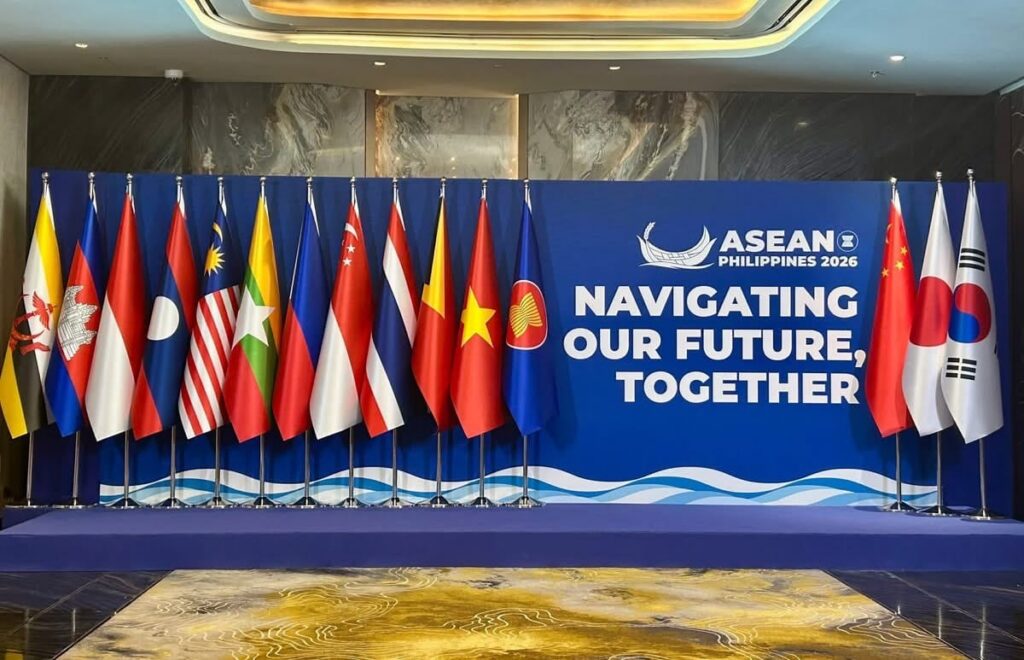
The Association of Southeast Asian Nations (ASEAN) is preparing to unveil a coordinated framework for addressing the escalating crisis in the Middle East, with foreign ministers set to convene in Cebu, Philippines, for a critical emergency meeting. This move marks a significant shift in the bloc’s traditional non-interventionist posture, signaling a recognition that instability in the Gulf and Levant now poses direct risks to Southeast Asia’s economic lifelines and maritime security.
As the region grapples with the ripple effects of the Israel–Hamas conflict, Houthi attacks on Red Sea shipping, and broader Iran–Israel tensions, ASEAN is no longer content to remain a passive observer. The Cebu summit, originally slated as a routine gathering, has been repurposed to forge a unified diplomatic and security response—one that balances the bloc’s diverse national interests with the urgent need for collective action.
Why the Middle East Crisis Demands ASEAN’s Attention
For decades, ASEAN has carefully avoided entanglement in Middle Eastern geopolitics. However, the current crisis has crossed several red lines that directly affect Southeast Asia’s core interests.
Key factors driving ASEAN’s engagement:
- Trade and energy dependence: ASEAN nations import over 60% of their crude oil from the Middle East. The Red Sea choke point—through which roughly 12% of global trade passes—has seen attacks that force ships to reroute via the Cape of Good Hope, adding weeks to delivery times and spiking freight costs.
- Overseas Filipino Workers (OFW) vulnerability: The Philippines, host of the summit, has over two million citizens working in the Middle East, many in Israel, Lebanon, and Gulf states. Repatriation and safety have become urgent political priorities.
- Maritime security spillover: The Strait of Malacca, a vital ASEAN waterway, faces potential piracy and naval escalation if the Middle East conflict spreads to the Indian Ocean or South China Sea.
- Religious and cultural sensitivities: Malaysia and Indonesia—both Muslim-majority nations—face domestic pressure to take a strong stance on Palestinian rights, while Thailand, Vietnam, and the Philippines maintain diplomatic ties with Israel.
These intersecting pressures have forced ASEAN to move beyond “ASEAN centrality” rhetoric and toward tangible crisis management mechanisms.
The Cebu Summit Agenda: Mapping a Three-Pillar Response
According to preliminary briefings, the ASEAN foreign ministers in Cebu are expected to endorse a three-pillar response framework. This structure aims to provide immediate humanitarian relief, sustain diplomatic engagement, and protect ASEAN’s economic interests without taking sides in the conflict.
Pillar One: Humanitarian Corridors and Evacuation Plans
The first and most urgent priority is ensuring the safe passage of ASEAN nationals trapped in conflict zones. The Philippines, Indonesia, and Malaysia have already launched repatriation flights, but the Cebu declaration will formalize a bloc-wide emergency response mechanism.
Expected commitments include:
- Establishment of a joint ASEAN liaison office in Cairo and Amman to coordinate consular assistance.
- Pre-positioning of rapid response teams and medical supplies in Oman and Jordan.
- A shared fund for evacuation costs, especially for smaller ASEAN states with limited embassy networks.
This pillar also calls for ASEAN to support UN-led humanitarian access to Gaza, with member states pledging increased contributions to UNRWA and the Red Crescent.
Pillar Two: Diplomatic De-escalation and Mediation
ASEAN is unlikely to directly mediate between Israel and Hamas, but it can serve as a credible backchannel for regional powers. The Cebu document is expected to endorse a “ASEAN Good Offices” initiative, leveraging the bloc’s experience in conflict resolution—most notably in Mindanao and southern Thailand.
Specific diplomatic tracks under discussion:
- The Indonesia-Malaysia axis: Both nations have existing ties with Iran and the Organization of Islamic Cooperation. They will lead efforts to push for a ceasefire through OIC channels.
- The “ASEAN Plus Three” model: Using China, Japan, and South Korea as partners to amplify ASEAN’s calls for restraint.
- Engagement with the GCC: Inviting Gulf Cooperation Council counterparts to a sidelines dialogue in Cebu to discuss maritime security guarantees.
ASEAN’s strength lies in its ability to convene all parties without imposing preconditions—a diplomatic asset that both sides of the Middle East conflict may find useful as ceasefire talks stall.
Pillar Three: Economic Contingency and Trade Route Diversification
The most consequential pillar for ASEAN’s long-term strategy is economic resilience. The Red Sea disruptions have exposed the bloc’s over-reliance on a single maritime chokepoint. The Cebu summit will task ASEAN economic ministers with developing a “Trade Route Resilience Plan” within 90 days.
Key measures under consideration:
- Accelerating the use of the ASEAN–India Maritime Corridor as an alternative to the Suez route.
- Expanding stockpiling agreements for crude oil and rice among ASEAN+3 countries.
- Promoting digital trade corridors and logistics hubs in Vietnam and Thailand to reduce physical shipping dependency.
This pillar also addresses insurance and shipping costs—ASEAN may propose a regional risk-pooling mechanism to help small and medium enterprises absorb freight volatility.
The Balancing Act: Diverse Stances Within ASEAN
One of the biggest challenges facing the Cebu declaration is the divergent positions of ASEAN member states. While the bloc operates by consensus, the Middle East crisis tests that principle to its limits.
Comparison of national positions:
| Country | Stance | Key Drivers |
|---|---|---|
| Indonesia | Strongly pro-Palestinian, calls for immediate ceasefire | Largest Muslim population, domestic politics |
| Malaysia | Similar to Indonesia, plus ties with Hamas | Political solidarity, historical support for Palestinian cause |
| Philippines | Balanced, prioritizes OFW safety | 2M+ OFWs in Israel and Gulf |
| Thailand | Neutral, economic focus | Large trade with both Israel and Iran |
| Singapore | Pragmatic, supports Israel’s right to self-defense | Strong Israel relations, defense technology ties |
| Vietnam | Observant, avoids direct condemnation | General non-alignment, economic interests |
The Cebu outcome will likely paper over these differences with broad language, emphasizing humanitarianism and de-escalation rather than assigning blame. Experts warn, however, that a weak consensus could render ASEAN’s response ineffective.
What the Cebu Summit Means for Global Geopolitics
ASEAN’s unified front—even if imperfect—carries weight beyond Southeast Asia. The bloc represents a neutral, non-Western voice that can speak to both Israel and its adversaries. By coordinating with China and the OIC, ASEAN may help unlock humanitarian access that bilateral diplomacy has failed to achieve.
Moreover, the Cebu meeting signals a strategic maturation of the organization. For the first time, ASEAN is proactively shaping a crisis response outside its immediate neighborhood—a departure from its reactive tradition. If successful, this could become a template for future extra-regional engagements, from the Horn of Africa to the South China Sea.
Challenges Ahead: Implementation and Credibility
Despite the ambitious framework, implementation obstacles remain. ASEAN lacks a centralized military or enforcement mechanism. The bloc’s economic contingency plans require buy-in from private shipping companies and insurers, many of which are not ASEAN-based. And the diplomatic track risks being overshadowed by great power rivalries between the US, China, and Russia.
To be credible, the Cebu declaration must include concrete timelines, measurable benchmarks, and a review mechanism. Without follow-up, the summit risks being remembered as another communiqué without impact.
Conclusion: A Defining Moment for ASEAN
The Cebu summit is more than a diplomatic exercise—it is a stress test for ASEAN’s relevance in a multipolar world. By mapping a comprehensive Middle East crisis response, the bloc is betting that its consensus-driven, non-confrontational approach can produce results where major powers have faltered.
Whether this gamble pays off will depend on the political will of ASEAN leaders, the flexibility of the framework, and the unpredictable evolution of the conflict itself. But one thing is clear: ASEAN is no longer sitting on the sidelines. The Cebu meeting marks the beginning of a more assertive, globally engaged Southeast Asia—and the world should take note.