Cebu’s Power Crisis: Tackling Growing Energy Demand for Reliable Supply
Cebu, known as the Queen City of the South, is facing a growing power crisis that could affect its economic growth. As a major center for business, tourism, and industry in the Visayas, Cebu depends heavily on stable electricity.
However, demand for power is rising faster than supply. Aging infrastructure and heavy reliance on limited energy sources have made the situation unstable. Still, with the right investments and energy strategies, Cebu can secure a reliable power supply in the years ahead.
The Current State of Cebu’s Energy Landscape
Electricity demand in Cebu is increasing by around 6–8% each year, driven by population growth, urban development, and industrial expansion. Unfortunately, power supply has not kept up.
Several key issues are causing the imbalance:
Many power plants are already old and less efficient. Frequent breakdowns and maintenance shutdowns often lead to unexpected outages.
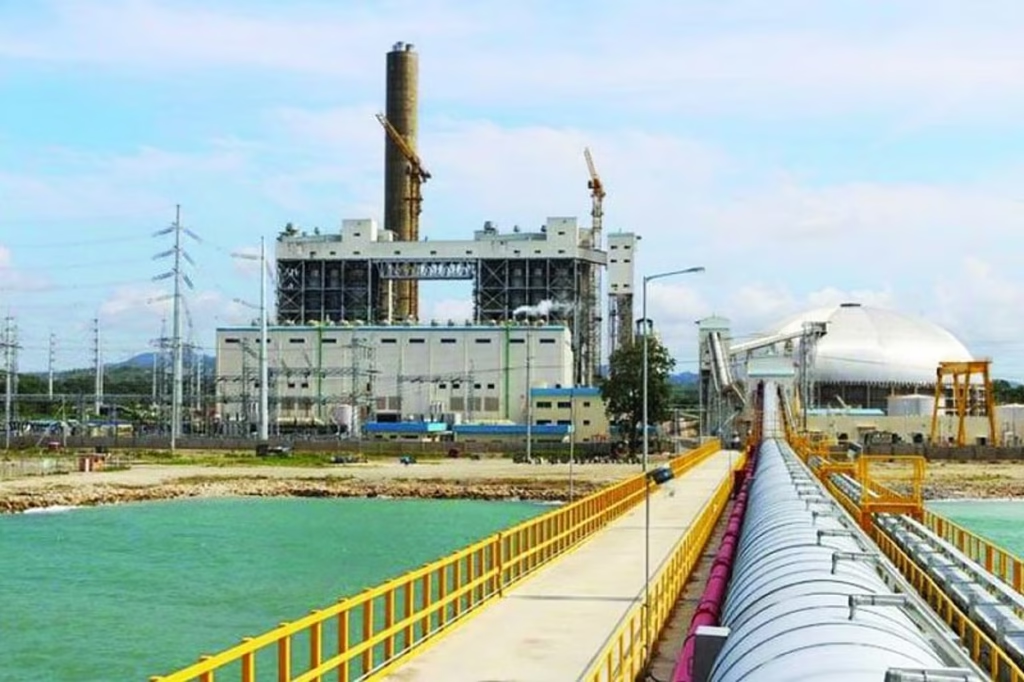
Cebu relies heavily on coal, which supplies about 70% of its electricity. This creates risks when fuel prices rise or supply chains are disrupted.
The transmission system has limited capacity, making it difficult to bring in electricity from nearby islands during peak demand.
Reserve power levels are also low. While the Department of Energy recommends a 25% reserve margin, Cebu often operates below 10%, increasing the risk of rotating brownouts.
These problems recently led to several power interruptions that affected businesses, schools, and daily activities. Some companies even reported productivity losses of up to 15%.
What’s Driving the Rising Demand?
Cebu’s growing economy is a major reason for the sharp increase in electricity use.
The business process outsourcing (BPO) sector continues to expand, requiring uninterrupted power for operations.
Manufacturing industries are also growing, and even short power outages can lead to large financial losses.
Tourism adds another layer of demand. With millions of visitors each year, hotels, resorts, and restaurants require large amounts of electricity.
At the same time, residential consumption is rising. More households are using air conditioners, appliances, and electronic devices, especially in urban areas.
Another emerging factor is the shift toward electric vehicles. While still developing, EVs and charging stations will increase demand on the power grid in the future.
What’s Being Done?
Efforts are already in place to address Cebu’s power challenges.
In the short term, the National Grid Corporation of the Philippines is improving connections between Cebu and nearby islands. This allows better sharing of electricity during peak demand.
The Visayan Electric Company is also securing emergency power supply agreements to ensure enough electricity during critical periods.
Some large businesses are participating in programs where they reduce power usage during peak hours in exchange for incentives.
For long-term solutions, new power plants are being developed, including coal and natural gas facilities.
Renewable energy projects are also expanding. Solar farms are increasing, and more wind and biomass projects are being planned.
At the same time, the power distribution system is being upgraded with modern technology to improve efficiency and reduce outages.
The Opportunity in Renewable Energy
Cebu has strong potential for renewable energy.
Solar power is one of the most promising options because of the province’s high sunlight exposure. Rooftop solar systems are also becoming more common in homes and businesses.
Wind energy is another opportunity, especially in northern Cebu where conditions are suitable for wind farms.
Biomass and waste-to-energy projects can help convert waste into electricity while reducing landfill use.
There is also geothermal potential in the southern part of the province, which could provide a stable and clean energy source.
However, renewable energy projects require large investments and better storage systems to ensure a steady power supply.
Key Challenges Ahead
Despite ongoing efforts, several challenges remain.
The approval process for energy projects can take time, slowing down progress.
Electricity costs in Cebu are already high, and adding new capacity may increase prices in the short term.
Land acquisition for infrastructure projects can also be difficult due to community concerns.
Energy storage is still limited, making it harder for renewable sources to fully replace traditional power plants.
A Roadmap for Cebu’s Energy Future
To solve the power crisis, Cebu needs a clear and balanced strategy.
The energy mix should be diversified to reduce dependence on coal and increase the use of renewable energy and natural gas.
Grid connections across the Visayas should be strengthened to allow better energy sharing.
Local energy solutions such as solar systems and microgrids should be encouraged to improve reliability.
Energy efficiency programs should also be promoted to reduce overall demand.
Finally, planning should be transparent and based on accurate data to support long-term growth.
Conclusion
Cebu’s power crisis is a serious challenge, but it also presents an opportunity for improvement.
With the right actions, the province can build a more stable, efficient, and sustainable energy system. Government, businesses, and consumers all have an important role to play.
Reliable electricity is essential for Cebu’s continued development. By addressing the issue now, Cebu can secure a stronger and more sustainable future.