Cebu Habal-Habal Drivers Endure Long Queues for Comelec Cash Aid
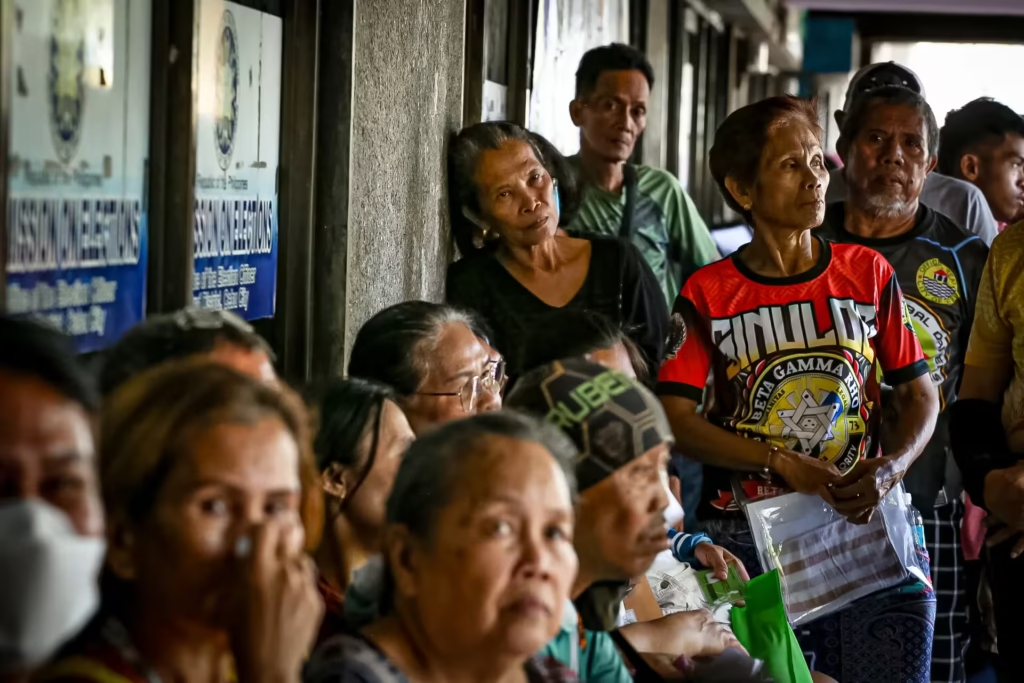
The sun beats down on the asphalt, and the line stretches farther than the eye can see. This isn’t a scene from a popular tourist attraction in Cebu, but a daily reality for hundreds of habal-habal drivers who have been waiting for hours, even days, for a promised financial lifeline. These motorcycle taxi drivers, the backbone of last-mile transportation in many of Cebu’s barangays, are caught in a grueling wait for cash assistance from the Commission on Elections (Comelec).
The promised aid is part of the Comelec’s Disturbance Compensation for those whose livelihoods were affected during the election period. For drivers who rely on daily earnings to feed their families, this compensation is not just a bonus; it’s a crucial support meant to offset the income lost on days when their operations were restricted due to election-related activities.
The Grueling Reality of the Wait
Pictures and reports from the ground paint a picture of endurance. Drivers, many wearing their signature helmets and long-sleeved shirts for protection, can be seen sitting on curbs, leaning against their motorcycles, or finding slivers of shade wherever possible. The queue at the designated Comelec payout area moves at a glacial pace, turning what should be a straightforward transaction into an all-day—or multi-day—ordeal.
A Test of Patience and Perseverance
The situation highlights several critical issues:
- Lost Wages: Every hour spent in line is an hour not spent earning a fare. For drivers living hand-to-mouth, this creates a cruel paradox: to receive aid for lost income, they must lose more income.
- Physical Hardship: Enduring the tropical heat without adequate shelter, food, or water poses a significant health risk, especially for older drivers.
- Logistical Bottlenecks: The sheer number of claimants, coupled with what appears to be a slow and under-resourced disbursement process, has created a massive bottleneck.
For these drivers, the habal-habal is more than a vehicle; it’s their office, their primary asset, and the sole source of income for their households. The prolonged disruption caused by this wait threatens the very stability the cash aid is supposed to provide.
Understanding the Comelec Disturbance Compensation
To understand why drivers are willing to endure such lines, it’s important to know what’s at stake. The Comelec provides disturbance compensation to individuals, like public utility drivers, whose “ordinary and lawful means of livelihood” were disrupted due to the election ban on certain activities.
Who Qualifies and Why?
During election periods, regulations often suspend the operations of services like habal-habal in certain areas or on specific days (e.g., on election day itself) to ensure security and order. This suspension, while necessary, cuts off the daily earnings of these drivers. The cash aid is a legal and moral obligation to mitigate that sudden loss of income.
The promised amount, while a significant help for a low-income family, becomes diminished when the cost of claiming it—in time, transportation to the site, and foregone fares—is so high.
The Human Stories Behind the Helmets
Behind the long queue are individual stories of struggle and hope. Many drivers are the sole breadwinners for their families. They speak of using the aid to pay for accumulated debts, to buy groceries, to cover school fees for their children, or to perform much-needed maintenance on their motorcycles—their essential tool for work.
The anxiety is palpable. Rumors about the funds running out or the process being canceled circulate through the line, adding mental stress to the physical discomfort. Their perseverance is a testament not to convenience, but to desperate need.
Calls for a More Efficient System
This recurring scene in Cebu—and likely in other parts of the country—has sparked calls for a more humane and efficient disbursement system. Observers and the drivers themselves suggest several improvements:
- Decentralized Payouts: Instead of one central location, having multiple payout centers in different districts or municipalities would drastically cut down travel time and crowd size.
- Staggered Scheduling: Assigning drivers specific time slots or days based on their license number or barangay could organize the flow and reduce all-day waits.
- Digital or Bank-Based Disbursement: Exploring direct bank transfers or payments through mobile money platforms could eliminate physical queues entirely, though this requires prior financial inclusion efforts.
- Better On-Site Facilities: For physical payouts, providing tents, chairs, access to drinking water, and organized numbering systems are basic necessities that show respect for the beneficiaries.
A Symbol of a Broader Challenge
The image of habal-habal drivers in a seemingly endless line is a powerful symbol of a broader challenge: the gap between policy intention and on-the-ground execution. The Comelec’s disturbance compensation is a well-intentioned program. However, its implementation can inadvertently create a new “disturbance” that further burdens the very people it aims to help.
It underscores the need for government agencies to prioritize user-centric design in public service delivery, especially when dealing with vulnerable sectors like informal transport workers. Efficiency and empathy must go hand-in-hand.
Moving Forward
As the drivers of Cebu continue their wait, their patience is a lesson in resilience. Their situation calls for immediate remedial action from the concerned agencies to expedite the current payout with dignity. More importantly, it should serve as a case study for planning future disbursements.
The goal should be clear: to deliver aid in a way that uplifts, rather than exhausts. To ensure that the support meant to cushion an economic disturbance does not become a debilitating ordeal of its own. The habal-habal drivers keep Cebu moving; it’s only fair that the systems designed to support them do the same.