Rare Earth Mining and Nuclear Waste Storage Plans for Remote Japanese Island Spark Global Debate
Japan’s strategic push to secure critical mineral supplies while addressing its long-term nuclear waste dilemma has converged on a single, isolated speck in the Pacific Ocean.
The island — Minamitorishima — is now at the center of a controversy that pits economic sovereignty against environmental caution and regional security concerns. As Tokyo moves forward with both deep-sea rare earth extraction and a proposed high-level nuclear waste repository on or near the island, international scrutiny is mounting.
The Island That Holds Two Keys to Japan’s Future
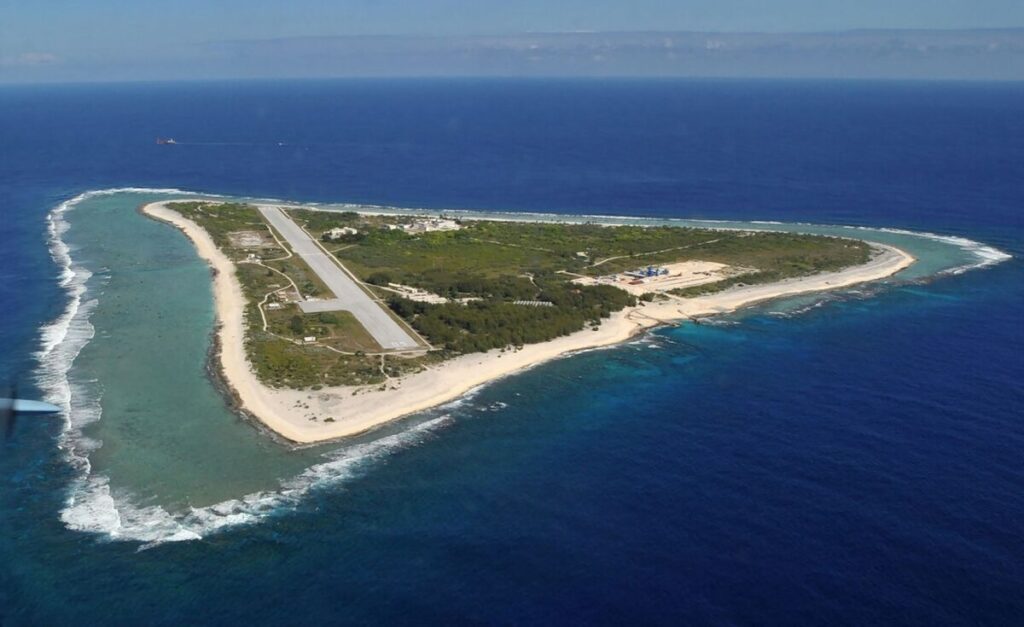
Minamitorishima, Japan’s easternmost territory, lies roughly 1,900 kilometers southeast of Tokyo. It is a tiny, uninhabited coral atoll with no fresh water and only a small weather station.
Yet beneath the surrounding seabed lies a treasure trove of rare earth elements (REEs) — critical materials used in everything from electric vehicle magnets to missile guidance systems — and, controversially, geological formations that some experts consider suitable for storing spent nuclear fuel.
Why this dual-use plan is unprecedented:
- No other nation has attempted to combine deep-sea rare earth mining with nuclear waste disposal in the same geographic zone.
- The island’s exclusive economic zone (EEZ) gives Japan legal rights over the resources, but raises questions about long-term stewardship.
- Local fishing communities and environmental groups fear irreversible damage to marine ecosystems that are still poorly understood.
Rare Earth Riches: A Strategic Imperative
Japan currently imports more than 60% of its rare earths from China, a dependence that became acutely painful during the 2010 Senkaku (Diaoyu) Islands dispute, when Beijing cut off supplies.
In response, the Japanese government launched an aggressive search for domestic sources. In 2018, a survey led by the University of Tokyo and the Japan Agency for Marine-Earth Science and Technology (JAMSTEC) discovered a massive deposit of rare earth-rich mud on the seabed near Minamitorishima.
The estimated volume — 16 million metric tons of rare earth oxides — could supply global demand for centuries.
The proposed mining plan includes:
- Deep-sea dredging at depths of 5,000 to 6,000 meters.
- On-island processing facilities to separate rare earth oxides, requiring energy, water, and waste disposal infrastructure.
- Port upgrades to handle mining vessels and cargo shipments.
The economic potential is enormous. Japan could reduce its reliance on Chinese supply chains and even become a net exporter of heavy rare earths like dysprosium and terbium, which are essential for permanent magnets in wind turbines and electric vehicles.
However, the environmental costs remain largely unquantified.
Deep-Sea Mining: Technical Feasibility vs. Ecological Risk
While the technology for extracting rare earth mud exists — it has been tested at pilot scale — commercial-scale operations at abyssal depths pose serious challenges.
Key risks identified by marine biologists and geoscientists include:
- Plume clouds of fine sediment that could smother benthic organisms for kilometers.
- Noise pollution from dredging equipment affecting cetaceans and deep-sea fish.
- Loss of habitat for unique chemosynthetic communities that may take decades to recover.
The International Seabed Authority has yet to finalize regulations for deep-sea mining in areas beyond national jurisdiction, but Minamitorishima lies within Japan’s EEZ, giving Tokyo unilateral authority.
Critics argue that Japan should wait until global environmental standards are established rather than rushing ahead.
Nuclear Waste: A Repository Under the Sea?
Perhaps even more contentious than the mining plan is the proposal to store high-level radioactive waste — spent fuel from Japan’s 33 operational reactors — in geological formations beneath or near Minamitorishima.
Japan has struggled for decades to find a permanent disposal site for its approximately 14,000 tons of spent fuel. The village of Suttsu in Hokkaido withdrew from consideration in 2020 after local opposition, and no other municipality has volunteered.
Why Minamitorishima is being considered:
- The remote location minimizes population exposure in the event of a leak.
- The deep Pacific plate is seismically stable compared to the Japanese mainland.
- The island’s basalt bedrock may provide natural barriers to radionuclide migration.
But the plan has ignited fierce opposition from neighboring countries and international nuclear watchdogs.
Major objections include:
- Transport risk: Shipping spent fuel 1,900 km from mainland ports through typhoon-prone waters.
- Lack of transparency: The Japanese government has not yet released full environmental impact assessments for a nuclear waste facility on Minamitorishima.
- Precedent for militarization: Some analysts fear that a permanent nuclear waste infrastructure could be used to justify a larger military presence on the island, which sits near key sea lanes.
Geopolitical Jitters: China and the United States Weigh In
Beijing has already voiced concern, arguing that any nuclear waste stored on Minamitorishima could contaminate Pacific fisheries shared by multiple nations.
Meanwhile, Washington — a key ally — has remained publicly neutral, though behind-the-scenes diplomatic cables suggest the U.S. views the rare earth project favorably as a way to wean Japan away from Chinese supply chains.
Regional stakeholders are divided:
- Japan’s Ministry of Economy, Trade and Industry (METI) champions the dual plan as a win-win for energy independence.
- Japan’s Ministry of the Environment has raised internal questions about the cumulative environmental impact of simultaneous mining and waste storage.
- Local fishing cooperatives in Ogasawara Village (the administrative parent of Minamitorishima) have filed formal protests, citing uncertain ecological damage.
- Greenpeace Japan has launched a campaign calling the plan “the most reckless environmental gamble in modern Pacific history.”
The Regulatory Maze: Who Decides?
Japan’s current legal framework does not explicitly prohibit combining mining and waste storage on a single island.
The Mining Act governs resource extraction, while the Specified Radioactive Waste Act covers geological disposal. However, no ministry has taken a lead role in assessing the synergies and conflicts between the two uses.
Key questions that remain unanswered:
- Can rare earth processing plants operate safely in the same area as a nuclear waste repository?
- What happens if mining activities cause seismic disturbances that compromise waste containment?
- Who will pay for long-term monitoring and eventual decommissioning of both facilities?
The Japanese government has announced a three-year feasibility study set to begin this spring. The study will involve JAMSTEC, the Japan Atomic Energy Agency, and private contractors.
A final decision on both projects is expected no earlier than 2028.
Expert Perspectives: A High-Stakes Balancing Act
Dr. Yukari Fujiwara, a geologist at the University of Tokyo who has studied deep-sea rare earth deposits for two decades, acknowledges the potential but warns against haste:
“We are talking about controlling the entire Pacific rare earth market while simultaneously burying the most dangerous waste humans have ever created. The island’s ecosystem does not recognize political boundaries. If something goes wrong, the fallout — both literal and figurative — will be global.”
On the other side, former Japanese defense official Kenji Ito argues that the island’s remote location makes it an ideal site, and that Japan must not let “greenfield environmental idealism” block its resource security.
The debate is likely to intensify as the feasibility study progresses.
International marine protection treaties, including the UN Convention on the Law of the Sea, may be invoked to slow or halt the projects. Meanwhile, Japan’s neighbors — particularly Pacific Island nations — are watching closely, fearing a precedent that could open their own exclusive economic zones to similar dual-use exploitation.
What This Means for the Future
The Minamitorishima case is more than a localized controversy. It represents a test case for how nations balance four competing priorities:
- Critical mineral supply security in an era of geopolitical supply chain weaponization.
- Climate-friendly energy that relies on nuclear power but produces long-lived waste.
- Environmental protection in one of the least-studied ecosystems on Earth.
- International governance of activities in remote ocean spaces that have no permanent inhabitants to speak for them.
If Japan proceeds, it will set a powerful precedent — one that may embolden other countries to pursue similar dual-purpose projects in their own offshore territories.
If it halts, the rare earth supply chain will remain fragile, and the nuclear waste problem will continue to fester.
The outcome will depend on whether Tokyo can demonstrate that deep-sea mining and high-level waste storage can coexist without catastrophic ecological consequences — a scientific and political challenge of the highest order.