Unlock Business Growth: Seizing the RCEP Advantage for Firms
In an era of shifting global trade dynamics, the Regional Comprehensive Economic Partnership (RCEP) stands as a monumental force, reshaping the economic landscape of the Asia-Pacific. For businesses, this isn’t just a political agreement; it’s a powerful catalyst for growth, innovation, and market expansion. Yet, many firms remain unaware of how to effectively harness its potential. This article serves as your strategic guide to seizing the RCEP advantage and unlocking unprecedented business growth.
What is RCEP and Why Does It Matter for Your Business?
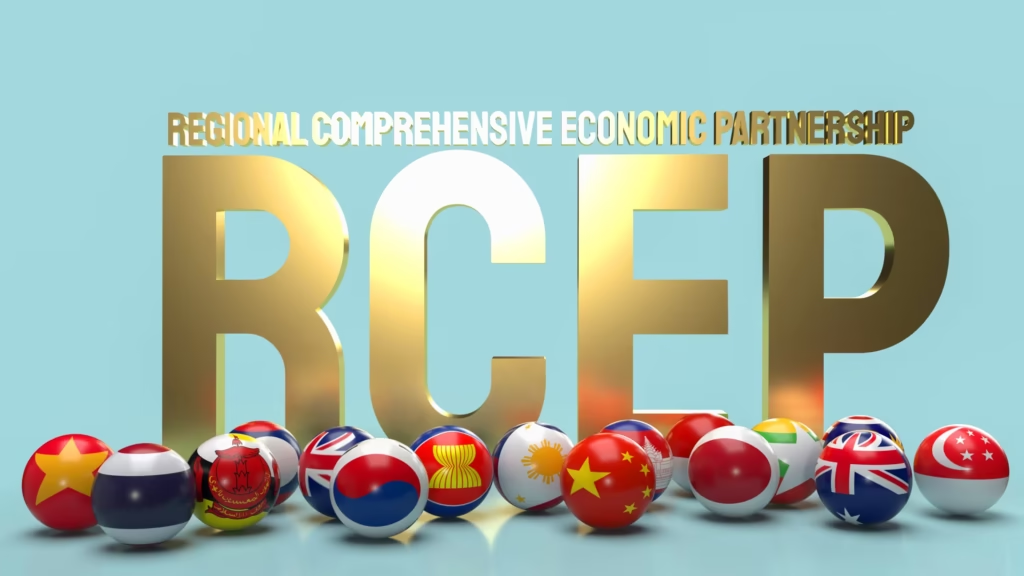
The Regional Comprehensive Economic Partnership (RCEP) is the world’s largest free trade agreement, encompassing 15 member countries: the ten ASEAN nations, plus China, Japan, South Korea, Australia, and New Zealand. It creates a massive integrated market covering nearly a third of the global population and GDP.
For businesses, RCEP matters because it simplifies and supercharges trade across this critical region. It’s not merely about cutting tariffs—though it does that extensively—but about creating a unified set of trade rules. This means reduced complexity, lower compliance costs, and a more predictable environment for companies operating across multiple Asian markets. If your business sources, manufactures, or sells in the Asia-Pacific, RCEP is a game-changer you cannot afford to ignore.
The Core Pillars of the RCEP Advantage
To strategically leverage RCEP, you must understand its key mechanisms. The agreement is built on several pillars designed to facilitate seamless commerce.
1. Tariff Elimination and Reduction
The most direct benefit is the progressive elimination of tariffs on over 90% of goods traded between member countries. This translates to:
- Lower input costs: Sourcing raw materials, components, and intermediate goods from within the bloc becomes significantly cheaper.
- Enhanced competitiveness: Your finished products gain a price advantage in RCEP markets compared to goods from non-member countries.
- Supply chain optimization: Reduced tariffs make it economically viable to diversify and restructure supply chains across the region for resilience and efficiency.
2. Unified Rules of Origin
This is arguably RCEP’s most transformative feature. Instead of navigating a confusing web of bilateral rules with each country, businesses can now use a single set of rules to determine a product’s origin.
- Goods that incorporate materials from multiple RCEP members can be combined to meet the origin criteria, encouraging deeper regional supply chain integration.
- It simplifies certification processes, reducing administrative burdens and making it easier for small and medium-sized enterprises (SMEs) to participate in regional trade.
3. Trade Facilitation and Simplified Customs
RCEP commits members to streamlined and expedited customs procedures. This means:
- Faster clearance of perishable goods at borders.
- Enhanced transparency in regulations and release times.
- Reduced red tape, leading to lower logistical costs and improved delivery timelines.
Strategic Actions to Seize the RCEP Advantage
Understanding the agreement is the first step; action is the next. Here’s how your firm can move from awareness to advantage.
Conduct a Strategic Tariff Analysis
Don’t assume benefits are automatic. Perform a detailed analysis of your product lines. Identify which of your exported goods or imported inputs are covered by preferential tariffs under RCEP. Engage with trade consultants or use government tariff portals to map out specific schedules for your key markets. This analysis will reveal immediate cost-saving opportunities and inform pricing strategies.
Re-evaluate and Optimize Your Supply Chain
With unified rules of origin, you have newfound flexibility. Ask critical questions:
- Can I source a key component from a different RCEP country to reduce cost without losing preferential access?
- Does it now make strategic sense to shift certain manufacturing stages to capitalize on specific member strengths?
- How can I build a more resilient, multi-country supply network within the bloc to mitigate risk?
This is the moment to think regionally, not just bilaterally.
Leverage Services and Investment Liberalization
RCEP isn’t just about goods. It opens doors in services sectors like telecommunications, professional services, and finance. It also provides more transparent and favorable rules for foreign investment. Consider:
- Expanding your service offerings into new RCEP markets.
- Forming strategic joint ventures or partnerships with firms in member countries.
- Exploring new investment opportunities in infrastructure or technology sectors that are now more accessible.
Master the Certification Process
To claim tariff preferences, you must prove your goods originate within the RCEP region. Familiarize yourself with the specific documentation, such as the Declaration of Origin. Invest in training your logistics and compliance teams, or partner with experienced customs brokers who understand the new system. Proper certification is the key that unlocks the tariff benefits.
Overcoming Challenges and Positioning for the Future
While the advantages are clear, businesses must also navigate challenges. Increased regional integration means intensified competition within the bloc. Companies must differentiate through quality, innovation, and branding. Staying updated on evolving technical standards and regulations across 15 countries also requires diligence.
The most successful firms will be those that view RCEP not as a one-time adjustment but as a long-term strategic framework. It encourages a shift from operating in single countries to operating across a unified regional economy.
Conclusion: Your Call to Action for Regional Growth
The RCEP agreement presents a historic opportunity to redefine your firm’s trajectory in the world’s most dynamic economic region. The advantage will not go to the passive but to the proactive. Begin your journey today by auditing your trade flows, consulting with experts, and developing a tailored RCEP strategy. By systematically seizing the levers of tariff reduction, unified rules, and market access, you can reduce costs, enhance competitiveness, and unlock sustainable growth. The world’s largest trade bloc is open for business—ensure your firm is ready to claim its share.