Retail and IT-BPM Dominate Cebu’s Employment Landscape: Why These Sectors Remain the Engines of Job Growth
Cebu has long been recognized as a key economic hub in the Philippines, and the latest employment data reaffirms its status. The retail and IT-business process management (IT-BPM) sectors continue to lead as the top job creators in the province, outpacing other industries in both volume and consistency. For job seekers, investors, and policymakers, understanding the dynamics behind this trend is critical—not just for short-term gains, but for shaping a sustainable workforce strategy.
The Data That Matters: Retail and IT-BPM Are Not Slowing Down
According to the most recent labor market reports from government agencies and industry bodies, Cebu’s retail trade sector and IT-BPM industry have maintained a combined hiring share that exceeds every other sector by a wide margin. Let’s break down the numbers and what they really mean.
- Retail Trade: Accounts for roughly 22% of total new job postings in Cebu in the past year.
- IT-BPM: Contributes approximately 18% of new roles, with a steady month-on-month increase in demand for mid-to-senior level positions.
- Combined impact: Together, these two sectors represent 40% of all active job vacancies in Cebu’s formal economy.
What’s interesting is that while other industries—such as construction and manufacturing—experience seasonal spikes, retail and IT-BPM show remarkable resilience even during economic troughs. This isn’t a fad; it’s a structural shift.
Why Retail Continues to Thrive in Cebu
Many observers assumed that the rise of e-commerce would cripple traditional brick-and-mortar retail. But in Cebu, the opposite has happened. Physical retail has evolved, not died. Let’s examine the forces at play.
The Mall Phenomenon and Tourism Synergy
Cebu’s mall density is among the highest in the Visayas. Major developers like SM Prime, Ayala Land, and Robinsons continue to expand their footprint here. Why? Because the province attracts both local consumers and tourists who spend on retail.
The synergy between tourism and retail is undeniable. When international flights resumed post-pandemic, Cebu saw a surge in visitors from Korea, Japan, and China. These travelers don’t just visit beaches; they shop. That demand drives hiring for:
- Sales associates and customer service representatives
- Inventory and logistics personnel
- Visual merchandisers and store managers
The Rise of Experiential Retail
Another trend fueling employment is the shift toward experiential retail. Stores are no longer just transaction points; they are destinations. Pop-up events, food courts, and integrated entertainment zones require more staff per square meter than traditional retail layouts.
Key hiring areas in experiential retail:
- Event coordinators
- Digital experience assistants
- Hospitality-trained floor staff
The bottom line: Retail in Cebu is not static. It is adapting—and that adaptation creates jobs that are more diverse and skilled than before.
IT-BPM: From Call Centers to High-Value Services
The IT-BPM sector in Cebu has undergone a significant transformation. It’s no longer just about voice-based customer support. Today, the sector includes:
- Digital transformation consulting – helping global clients migrate to cloud platforms.
- Healthcare information management – processing medical records and insurance claims.
- Software development and QA testing – particularly for fintech and e-commerce companies.
- Creative and content services – animation, graphic design, and social media management.
Why Cebu Attracts IT-BPM Investment
Several factors make Cebu a preferred location over Metro Manila for IT-BPM firms:
Lower operational costs without sacrificing talent quality.
Highly educated English-proficient workforce from universities like the University of San Carlos, Cebu Institute of Technology, and the University of the Philippines Cebu.
Favorable local government policies, including tax incentives and streamlined business registration.
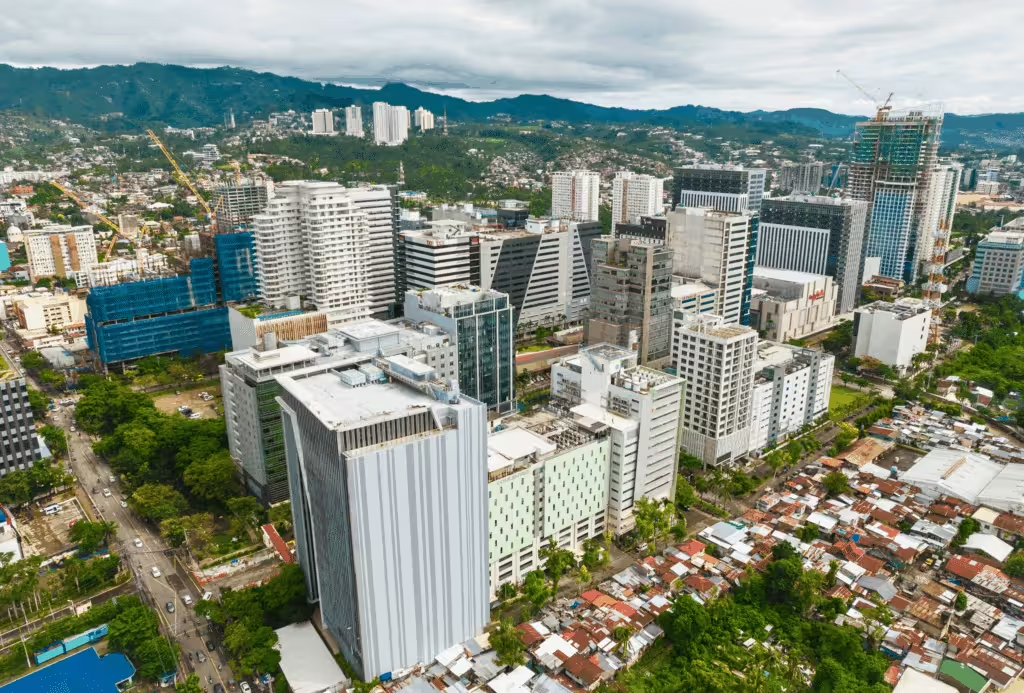
Growing infrastructure: new office towers in Cebu IT Park and Cebu Business Park are designed for hybrid work models.
The result? Major multinationals—including Accenture, Concentrix, and Qualfon—have expanded their Cebu footprints. The sector now employs over 150,000 workers in the province, and that number is expected to grow by 8-10% annually.
What This Means for Job Seekers and Career Changers
If you’re in Cebu and looking for stable employment, the data points a clear direction. But not all jobs are created equal. Here is actionable advice based on current hiring trends.
For Retail Aspirants
Do not underestimate soft skills. Retail employers are increasingly prioritizing communication, adaptability, and emotional intelligence over pure experience. If you can demonstrate a customer-first mindset, you stand out.
Certifications that add value:
- Retail management short courses from DTI or TESDA
- Basic financial literacy (for inventory and POS systems)
- Digital marketing basics (for online-offline integration)
For IT-BPM Candidates
The entry bar is rising. Entry-level voice roles are still available, but the real growth is in non-voice and specialized positions. To future-proof your career:
Learn a specific tool or platform: Salesforce, SAP, AWS, or ServiceNow.
Build a portfolio of projects—even personal ones—to showcase problem-solving skills.
Consider niche domains: healthcare BPM, legal process outsourcing, or financial analytics.
Pro tip: Many IT-BPM firms in Cebu now offer internal upskilling programs. Take advantage of them. It’s common for a customer support agent to transition into a data analyst role within 18 months.
Economic Implications: A Double-Edged Sword?
While the dominance of retail and IT-BPM is good news for employment numbers, it also raises concerns about economic diversification.
Risk factors to monitor:
- Over-reliance on two sectors makes Cebu vulnerable to global downturns in consumer spending or outsourced services.
- Wage stagnation is possible if labor supply outpaces demand in lower-skilled retail roles.
- Infrastructure strain—more workers mean more traffic, housing demand, and utility consumption.
But here’s the expert perspective: Cebu’s economy is not monolithic. The growth of retail and IT-BPM has indirectly spurred ancillary industries. Food and beverage, logistics, real estate, and even education have all benefited. The key is to ensure that these sectors don’t become the only game in town.
What Policymakers Should Prioritize
To sustain Cebu’s job creation momentum, local government and industry bodies need to act strategically.
- Invest in digital literacy from basic education. The IT-BPM sector will need more programmers, not just English speakers.
- Support small and medium retail businesses with access to affordable financing and digital tools. SMEs are the backbone of retail employment.
- Create a talent portability framework that allows workers to move between retail and IT-BPM without losing tenure benefits—this encourages cross-sector skill development.
The Verdict: Retail and IT-BPM Are Here to Stay, But Will Evolve
Cebu’s job market is not static. The retail sector will continue to generate large numbers of frontline roles, but those roles will demand more tech literacy and service sophistication. The IT-BPM sector will keep climbing the value chain, seeking specialists rather than generalists.
For anyone building a career or a business in Cebu, the message is clear: align with these two engines, but stay agile. The retail worker of tomorrow may need to know basic coding. The IT-BPM professional of the future may need retail domain expertise.
The story of Cebu’s employment is a story of adaptation. And adaptation, as any economist will tell you, is the surest path to resilience.